
Switching to a concrete driveway is a smart move for anyone looking for a durable and long-lasting surface. With proper care, your concrete driveway can last 25 to 30 years, outlasting other materials and withstanding harsh weather, UV rays, and heavy vehicle traffic. Unlike asphalt, gravel, or other driveway materials, concrete’s longevity and durability reduce the need for constant repairs and enhance your home’s curb appeal. To maximize its lifespan, be sure to regularly seal your concrete driveway. Though this is just one part of the equation, there’s much more to explore about concrete driveway construction and its unmatched benefits.
Key Takeaways
- Concrete driveways offer superior durability, lasting 25-30 years with proper maintenance, reducing the need for frequent repairs.
- High-quality installation and regular sealing help minimize damage, ensuring the longevity of your concrete driveway.
- Compared to asphalt or gravel, concrete driveways better resist harsh weather and heavy traffic, needing fewer repairs.
- A concrete driveway is a cost-effective investment due to its durability and minimal maintenance requirements.
- Addressing small cracks promptly and hiring professionals for extensive damage repairs can help further extend the life of a concrete driveway.
Understanding Concrete Driveway Durability
While many homeowners overlook their driveway’s surface, understanding the durability of concrete driveways can significantly impact long-term property maintenance. Concrete driveway construction is popular due to its strength and longevity. With proper care, a concrete driveway can last 25-30 years or more, making it a sound investment.
Concrete’s durability stems from its resistance to various environmental conditions. It withstands the weight of vehicles, extreme weather, and even the harmful effects of UV rays, which can cause fading. Unlike asphalt, which deteriorates over time, concrete maintains its integrity and appearance. It’s also less prone to cracking, a common problem with other driveway materials.
However, concrete driveways are not completely maintenance-free. Regular sealing is crucial for protecting the surface, prolonging its lifespan, and preventing damage. Small cracks, if they appear, should be addressed promptly to avoid further deterioration. This minor upkeep is a small price to pay for the long-term durability concrete offers.
The Cost Efficiency of Concrete Driveways
Although the initial installation cost of a concrete driveway may be higher than that of other materials, it’s an incredibly cost-effective solution in the long term. The reason for this is its longevity and low maintenance needs.
Concrete driveways are known for their durability. They can handle the weight of vehicles, harsh weather, and years of wear. With proper care, your concrete driveway can last up to 30 years, sometimes even more. That’s a long time before you need to think about replacement.
In terms of maintenance, concrete driveways shine. Unlike asphalt or gravel, concrete requires minimal upkeep. Regular sealing is key to maintaining your driveway’s integrity and appearance. This small but crucial measure can help you avoid costly repairs down the road.
Moreover, concrete driveway installation offers a wide range of aesthetic options. You can choose from various textures, finishes, and colors to create a driveway that complements your home’s curb appeal. This, in turn, can increase the value of your property, making the initial investment even more worthwhile.
In short, while the upfront cost might be higher, the long-term savings and benefits make a concrete driveway a smart investment.
Concrete vs. Other Driveway Materials
When it comes to selecting a driveway material, concrete stands out against competitors like asphalt and gravel. Concrete driveway construction provides unmatched strength, durability, and versatility.
Concrete driveways can withstand heavy traffic, harsh weather, and UV rays, things that cause asphalt to break down over time. Though asphalt may be cheaper initially, it cracks more quickly than concrete and requires resealing every few years. In contrast, concrete provides a more durable and long-lasting solution, saving you both time and money in the long run.
Gravel, while initially inexpensive, requires frequent maintenance. You will need to replenish loose gravel and repair ruts regularly. Concrete, on the other hand, provides a solid, stable surface that demands much less effort to maintain.
Not only does concrete outperform other materials in terms of longevity, but it also significantly boosts your home’s curb appeal.
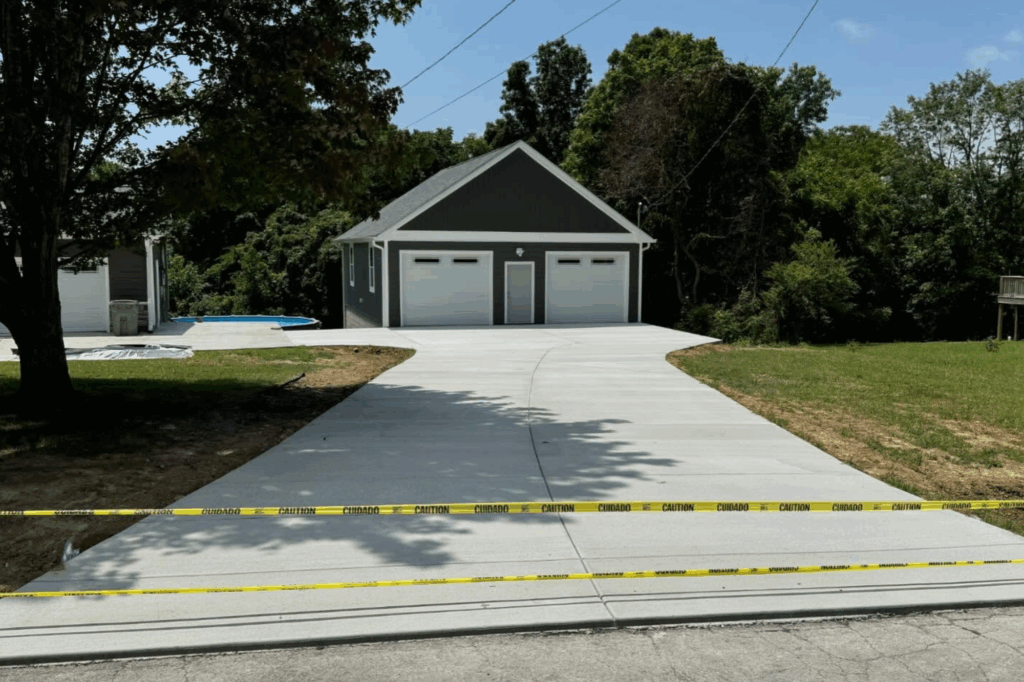
Installation Process for Concrete Driveways
Let’s now look at the practical aspects of concrete driveway installation. It all begins with proper preparation, which is crucial to ensuring a durable and lasting surface.
1. Site Preparation
The first step is to remove any existing material from the driveway area, followed by excavating the site and leveling the ground. This step creates a solid foundation for the concrete. A base layer of compacted soil or gravel is laid down to provide stability for the concrete driveway.
2. Mixing and Pouring Concrete
Once the foundation is ready, a high-quality concrete mix is prepared. It’s important to get the right consistency, neither too thick nor too runny. The concrete is then poured into molds that define the shape of the driveway. A professional installer will ensure the surface is level and free of bubbles.
3. Curing and Sealing
After pouring, the concrete needs time to cure. This process, which takes about 24-48 hours, allows the concrete to harden and gain maximum strength. During this time, avoid walking or driving on the surface. After curing, a sealer is applied to protect the concrete driveway from wear and enhance its appearance.
The result is a durable, attractive concrete driveway that will serve you for years.
Maintenance Tips for Concrete Driveways
To keep your concrete driveway in top condition, regular maintenance is essential. Let’s review some important steps to ensure your driveway lasts as long as possible.
1. Regular Cleaning
Routine cleaning is essential to maintaining your concrete driveway’s appearance. Sweep or hose down your driveway to remove dirt, debris, and stains. This not only keeps it looking neat but also prevents the accumulation of substances that could damage the surface.
2. Sealing Every Few Years
Sealing your driveway every two to three years is crucial to protect it from the elements. The right sealer repels water, resists stains, and slows down wear. Don’t skimp on the quality of the sealer, as a high-quality product can make a significant difference in your driveway’s longevity.
3. Address Cracks Promptly
Even the smallest cracks can expand into more significant problems if left untreated. Use a concrete crack filler or patching compound for minor repairs. If the damage is more extensive, hiring a professional is advisable to ensure the repair is done correctly.
In Summary
In conclusion, opting for a concrete driveway is a smart, long-term decision. Its durability means fewer repairs, while its versatility in design enhances your home’s curb appeal. Compared to other materials, concrete driveways are cost-efficient and low-maintenance. With proper installation and regular maintenance, your concrete driveway can last for decades. Turn your driveway into a long-term success story with expert concrete driveway construction from The Outback Builder, INC.